


The short answer
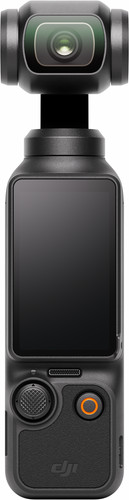
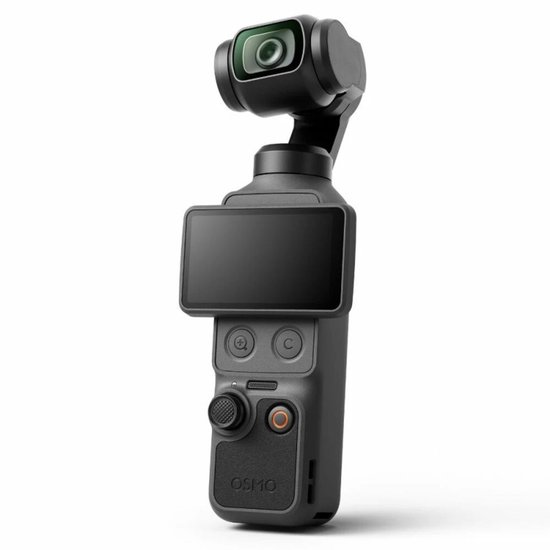
The Osmo Pocket 4 is a step forward on almost every point: 37 megapixels for photos instead of 9.4, slow motion in 4K at 240 frames per second, 107 GB of built-in storage and, according to DJI, 74 minutes more filming on a charge. The Osmo Pocket 3 has the same lens, the same sensor size and the same mechanical gimbal, and currently costs €190 less. According to DroneXL, many people are still completely happy with the Pocket 3.
Choose the Pocket 3 if…
- you mainly vlog or make holiday videos in ordinary 4K;
- you would rather spend the price difference on a microphone or tripod;
- you take few photos with the camera;
- you don't grade colours yourself and so don't need a flat log profile.
Choose the Pocket 4 if…
- you film for long days and don't want to keep topping up the charge;
- you also want sharp photos: 37 megapixels versus 9.4;
- you want slow-motion footage in 4K at 240 frames per second;
- you want to be able to film without a memory card and transfer files quickly.

The lens and the sensor size are the same, so don't expect a world of difference in an ordinary vlog. The Pocket 4's gains are in convenience: storage on board, a brighter screen, extra buttons and a battery that lasts a day of filming. If you already have a Pocket 3, you don't need to switch. If you are buying your first one now, take an honest look at how you will use it: for the occasional vlog the Pocket 3 at €269 is a very sensible buy.
Specs side by side
| Pocket 3 | Pocket 4 | |
|---|---|---|
| Sensor | 1-inch CMOS | 1-inch CMOS (stacked) |
| Lens | 20 mm, f/2.0 | 20 mm, f/2.0 |
| Photos | 9.4 megapixels | 37 megapixels |
| Slow motion in 4K | 120 frames per second | 240 frames per second |
| Dynamic range (DJI's figure) | 12 stops | 14 stops |
| Colour profiles | 10-bit D-Log M and HLG | 10-bit D-Log |
| Built-in storage | None (microSD only) | 107 GB and microSD |
| Screen | 2.0-inch, 700 nits | 2.0-inch, 1,000 nits |
| Subject tracking | ActiveTrack 6.0 | ActiveTrack 7.0 |
| Recording time Full HD (DJI's figure) | 166 minutes | 240 minutes |
| Connections | Wi-Fi 5, USB 2.0 | Wi-Fi 6, USB 3.1 |
| Weight | 179 grams | 190.5 grams |
| Price | from €269 | from €459 |
Highlighted in green = better on that point. Specifications according to Notebookcheck, heliguy and DroneXL, based on DJI's figures. The sources disagree on the weight of the Pocket 4: heliguy and DroneXL say 190.5 grams, Notebookcheck 198 grams.
Benchmarks
This is the recording time DJI quotes for filming in Full HD at 24 frames per second, as reported by Notebookcheck. Both cameras have a 1,545 mAh battery. In 4K you film for less time. Higher is better.
Source: Notebookcheck: DJI Osmo Pocket 4 vs Osmo Pocket 3, alle verschillen
Picture and slow motion
Both cameras have a 1-inch sensor behind a 20 mm lens with an f/2.0 aperture. The Pocket 4's sensor is a new, stacked type. According to Notebookcheck that delivers 14 stops of dynamic range, versus 12 on the Pocket 3, and a higher maximum light sensitivity. For photos the difference is big: 37 megapixels versus 9.4.
The Pocket 4 films slow motion in 4K at 240 frames per second, double the Pocket 3. There is a new, flat D-Log profile for those who grade colours themselves. On the other hand, the Pocket 4 now only records in 10-bit H.265. The Pocket 3 can also handle 8-bit H.264, which is easier to edit on older computers.
Storage, battery and controls
The Pocket 3 has no storage of its own: without a microSD card you can't film. The Pocket 4 has 107 GB on board and, according to heliguy, transfers files at up to 800 MB per second via USB. The battery has stayed the same size (1,545 mAh), but the Pocket 4 is more efficient: DJI quotes 240 minutes in Full HD, versus 166 minutes. Charging to 80 per cent takes 16 minutes on the Pocket 3 and 18 minutes on the Pocket 4.
Below the Pocket 4's screen are extra buttons for zoom and a custom function. At 1,000 nits the screen is brighter, which helps outside in the sun. Would you rather have a camera that can take a knock and handle water? Then read GoPro HERO13 Black vs DJI Osmo Action 6.
Prices
These are the versions from our product feed, with a direct link to the product page at Dutch online shops. Prices are updated automatically as soon as the shop changes them. Always check the current price at the shop.
If you buy through these links we may earn a commission, at no extra cost to you. That does not change the verdict. How we make money.
 FAQ
What is the difference between the DJI Osmo Pocket 3 and Pocket 4?
The Pocket 4 has a new 1-inch sensor with 37 megapixels, 4K slow motion at 240 frames per second, 107 GB of built-in storage, a brighter screen and a longer recording time. Lens and size are almost the same.
Is the Osmo Pocket 3 still a good buy?
Yes. It has the same lens and the same sensor size as the Pocket 4 and films in 4K at 120 frames per second. For vlogs and holiday videos that is more than enough.
Should I switch from the Pocket 3 to the Pocket 4?
Only if you really miss the extras: longer battery life, built-in storage, better photos or 240 frames per second. DroneXL advises satisfied Pocket 3 users to keep their camera.
Does the Osmo Pocket 4 need a memory card?
No. It has 107 GB of storage built in. You can also use a microSD card of up to 1 TB.
Sources
Benny does not test in a lab himself. Specs come from the manufacturer, measurements from independent testers. These are the sources for this comparison:
- Notebookcheck: DJI Osmo Pocket 4 vs Osmo Pocket 3, alle verschillen
- heliguy: DJI Osmo Pocket 4 vs DJI Osmo Pocket 3
- DroneXL: DJI Osmo Pocket 3 vs Pocket 4
Spotted something out of date? Let us know and we'll fix it.