

The short answer
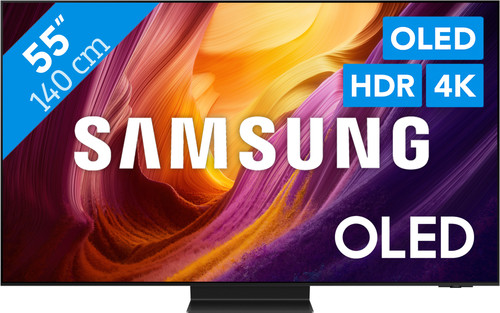
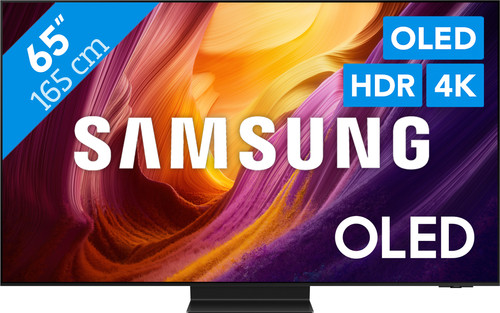
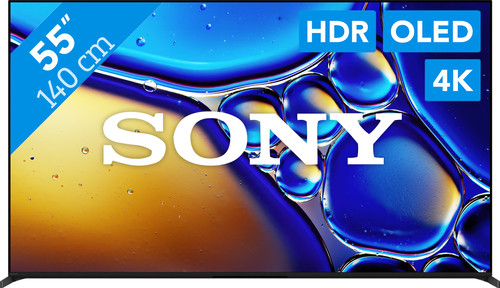
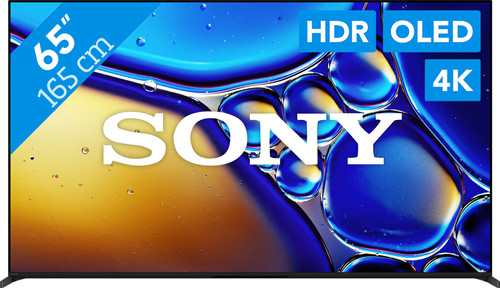
On measurements the Samsung S95H wins: it is much brighter, deals with reflections best, has more fast HDMI ports and is cheaper. RTINGS calls it the better TV, especially in a bright room. The Sony Bravia 8 II remains worth a look for anyone who mainly watches films in a darkened room: it has Dolby Vision, a calm and true-to-life picture and better sound from the TV itself.
Choose the Samsung S95H if…
- your TV is in a bright living room, with windows or lamps opposite the screen;
- you want HDR pictures with as much punch as possible;
- you game, especially with more than one console or a PC;
- you are looking for a size larger than 65 inches.
Choose the Sony Bravia 8 II if…
- you mainly watch films and series in a dark room;
- you want Dolby Vision, the HDR format most streaming services use;
- you don't want a soundbar and expect good sound from the TV itself;
- you prefer Google TV to Tizen, or have a PS5 and want the special PS5 features.

For most living rooms I would take the Samsung. It is €200 cheaper at 55 inches, a good deal brighter and the lamp above the dining table doesn't bother you. The Sony is a TV for people who know why they want it: curtains closed, film on, Dolby Vision, no soundbar needed. Then it is gorgeous. But don't count on it keeping up with the Samsung in the daytime.
Specs side by side
| Samsung S95H | Sony Bravia 8 II | |
|---|---|---|
| Panel | QD-OLED | QD-OLED |
| Model year | 2026 | 2025 |
| Peak HDR brightness (measured) | 2,739 nits | 1,439 nits |
| Full-screen brightness (measured) | 449 nits | 183 nits |
| Screen finish | Matte (Glare Free), deals with reflections best | Anti-reflective coating, less effective than Samsung's |
| Dolby Vision | No | Yes |
| HDR10+ | Yes | No |
| HDMI 2.1 | 4 ports | 4 ports, 2 of them at full speed |
| Refresh rate | Up to 4K at 165Hz | Up to 4K at 120Hz |
| Sizes | 55, 65, 77 and 83 inches | 55 and 65 inches |
| Software | Tizen | Google TV |
| Sound | Clear voices, little bass | Acoustic Surface Audio+: the screen is the speaker |
| Price 55-inch | €1,899 | €2,099 |
| Price 65-inch | €2,299 | €2,399 |
Highlighted in green = better on that point. Brightness measured by TechRadar: the Samsung in Filmmaker Mode, the Sony in Cinema mode. Other specifications according to Tom's Guide and What Hi-Fi. Prices as of 16 November 2026.
Benchmarks
TechRadar measured both TVs in its own lab, each in its most accurate picture mode. The measurements come from two different articles, but were done in the same way. Higher is better.
Source: TechRadar: Samsung S95H en LG G6 naast elkaar, TechRadar: LG, Samsung en Sony top-OLED's naast elkaar
Source: TechRadar: Samsung S95H en LG G6 naast elkaar, TechRadar: LG, Samsung en Sony top-OLED's naast elkaar
Picture: bright versus restrained
Both TVs have perfect black and very rich colours; that comes with QD-OLED. According to RTINGS, the differences in a dark room are therefore small. The difference is in brightness. In TechRadar's measurement the Samsung reaches 2,739 nits, the Sony 1,439. With a fully light picture it is 449 versus 183 nits.
By default the Sony is set up to preserve nuances in light areas rather than be as bright as possible. With the 'Brightness Preferred' setting it gets brighter, but that costs contrast. What Hi-Fi calls the Sony's picture superb: vivid colours in dark scenes and lots of shadow detail. According to TechRadar the Samsung shows natural colours and skin tones, but sometimes loses a little detail in the shadows in dark scenes.
Bright room and reflections
The S95H has a matte screen layer that turns mirror images into a soft haze. RTINGS names that, together with the higher brightness, as the reason the Samsung is clearly better in a bright room. The downside of matte: in a bright room black becomes slightly greyer.
The Sony has an anti-reflective coating that dampens reflections. According to TechRadar it does well with lamps above the TV, but less well than the matte Samsung screen.
Dolby Vision or HDR10+
Sony supports Dolby Vision, Samsung does not. Samsung supports HDR10+, Sony does not. Dolby Vision is used by most streaming services. Without Dolby Vision the Samsung falls back on standard HDR10. On a TV this bright that still looks very good, but for film lovers this is a point for Sony.
Gaming and connections
The Samsung has four HDMI 2.1 ports and goes up to 165Hz. Tom's Guide measured an input lag of 9.7 milliseconds. On the Sony two of the four ports work at full speed, and one of those is also the eARC port for your soundbar or receiver. With a PS5, an Xbox and a soundbar you are then one fast port short.
The Sony does have VRR, an automatic game mode, Dolby Vision for games and the features Sony calls 'Perfect for PlayStation 5'.
Sound and sizes
On the Sony the screen itself vibrates as a loudspeaker, helped by two small subwoofers. TechRadar calls it the best built-in sound of the top OLEDs: solid bass, clear voices and sound that comes from the right place in the picture. According to Tom's Guide the Samsung sounds fine for everyday viewing, but lacks deep bass. With a soundbar this difference disappears.
The Sony only comes in 55 and 65 inches. The Samsung also comes in 77 and 83 inches.
Prices
Below are direct links to the product pages at Dutch online shops, per screen size. Prices are updated automatically as soon as the shop changes them in its product feed. Always check the current price at the shop.
If you buy through these links we may earn a commission, at no extra cost to you. That does not change the verdict. How we make money.
 FAQ
Which is better, the Samsung S95H or the Sony Bravia 8 II?
RTINGS calls the Samsung S95H the better TV, especially in a bright room: it is much brighter and deals with reflections better. In a dark room the differences are small and the Sony has the advantage of Dolby Vision and better sound.
Does the Samsung S95H have Dolby Vision?
No. Samsung supports HDR10, HDR10+ and HLG, but not Dolby Vision. The Sony Bravia 8 II does have Dolby Vision, but not HDR10+.
Which is better for gaming?
The Samsung S95H: four HDMI 2.1 ports, up to 165Hz and a measured input lag of 9.7 ms. The Sony has two fast ports and goes up to 120Hz. If you only have a PS5, the Sony is a good choice too.
Isn't the Sony Bravia 8 II out of date?
It is a 2025 model, but it is still on normal sale in November 2026. The panel and the picture processing are still top class. Only in brightness has it been overtaken by the 2026 models.
Is the Samsung's matte screen a disadvantage?
In a bright room it is a big advantage: you see no mirror images. In a dark room it makes little difference. If light falls on the screen, black does look slightly greyer.
Sources
Benny does not test in a lab himself. Specs come from the manufacturer, measurements from independent testers. These are the sources for this comparison:
- RTINGS: Sony BRAVIA 8 II vs Samsung S95H OLED
- TechRadar: Samsung en LG's beste OLED-tv's naast elkaar getest
- TechRadar: LG, Samsung en Sony top-OLED's naast elkaar getest
- Tom's Guide: Samsung S95H OLED review
- What Hi-Fi?: LG G6 vs Sony Bravia 8 II
Spotted something out of date? Let us know and we'll fix it.