

The short answer
Surprisingly, the more expensive lens here is the slower one. According to Photography Life, the 35mm f/1.8 S is slightly sharper overall and does better with backlight, distortion and colour aberrations. The 35mm f/1.4 gives half a stop more light and more background blur for less money. Phillip Reeve sums it up: the S lens performs just slightly better in most categories, the f/1.4 is there for anyone who wants the extra light.
Choose the 35mm f/1.4 if…
- you often shoot in low light and every half stop counts;
- you want as much background blur as possible from a 35mm;
- your budget is limited;
- you mainly use the lens around f/2 to f/5.6, where it is strong in the centre.
Choose the 35mm f/1.8 S if…
- you often shoot into the sun or with lamps in the frame;
- you capture stars or city lights and want little coma;
- calm, attractive blur matters more to you than maximum blur;
- you also shoot video and want little focus breathing.

This is a fair trade. For €220 less you get more light with the f/1.4, but you give something up around the edges: more vignetting and colour aberrations wide open and a somewhat busier blur. The f/1.8 S is the lens for pixel peepers and backlight lovers. If you mainly shoot reportage, family and street photos, the f/1.4 is the better deal. You do not have to choose on size: they are virtually the same size and take the same 62mm filters.
Specs side by side
| 35mm f/1.4 | 35mm f/1.8 S | |
|---|---|---|
| Maximum aperture | f/1.4 | f/1.8 |
| Weight | 415 grams | 370 grams |
| Length | 87 mm | 86 mm |
| Filter size | 62 mm | 62 mm |
| Minimum focus distance | 27 cm | 25 cm |
| Coating | Super Integrated Coating | Nano Crystal Coat, fluorine coating on front element |
| Splash-proof | Yes | Yes |
| Flare and backlight (Phillip Reeve) | good | better |
| Coma wide open (Phillip Reeve) | visible | less |
| Price in our feed | €679 | €899 |
Highlighted in green = better on that point. Weight, length, filter size and focus distance according to Coolblue's product pages; coatings and test findings according to Phillip Reeve. Prices as of 16 November 2026.
Benchmarks
Weight and focus distance are manufacturer's figures as listed by Coolblue. They are not our own measurements.
Source: Coolblue: Nikon Nikkor Z 35mm f/1.4 (specificaties), Coolblue: Nikon Nikkor Z 35mm f/1.8 S (specificaties)
Source: Coolblue: Nikon Nikkor Z 35mm f/1.4 (specificaties), Coolblue: Nikon Nikkor Z 35mm f/1.8 S (specificaties)
Sharpness
There is little between the two. On the f/1.4 at f/1.8, Photography Life measured an MTF50 of 2,632 lines in the centre, 1,693 midway and 932 in the corners. The f/1.8 S reaches a higher maximum in every part of the frame and never drops as far in the corners. On the other hand, the f/1.4 is actually sharper in the centre at f/1.8 and f/2.
Phillip Reeve arrives at the same picture: at the same aperture the f/1.4 is slightly ahead up to about f/5.6, after that the S lens has a small advantage. From f/2.8 both are excellent.
Bokeh, backlight and colour aberrations
The f/1.4 blurs the background more, but Phillip Reeve finds that blur busier at medium and long distances. He prefers the rendering of the S lens. Wide open the f/1.4 also shows more vignetting, more longitudinal colour aberrations and visible coma. Around f/2.8 the colour aberrations are about the same on both.
The f/1.8 S has Nikon's Nano Crystal Coat, the f/1.4 does not. In practice the S lens gives less ghosting and less veiling when the sun or a lamp is in the frame.
Size and use
The f/1.4 weighs 415 grams, the f/1.8 S 370 grams. They differ by a millimetre in length and both use 62mm filters. On a camera such as the Nikon Z5 or Z5 II they are both well balanced. According to Phillip Reeve the f/1.4 focuses accurately, at a speed that is acceptable but not fast. The S lens has less focus breathing, which is nice for video.
Prices
These are the versions from our product feed, with a direct link to the product page at Dutch online shops. Prices are updated automatically as soon as the shop changes them. Always check the current price at the shop.
Nikon Nikkor Z 35mm f/1.4
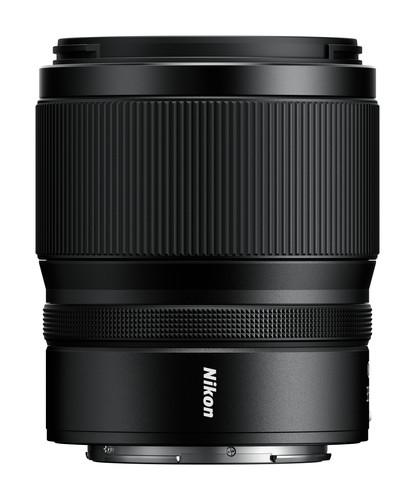 Nikon Nikkor Z 35mm f/1.4at Coolblue · price checked on 16 November 2026€679Order at Coolblue ↗
Nikon Nikkor Z 35mm f/1.8 S
 Nikon Nikkor Z 35mm f/1.8 Sat Coolblue · price checked on 16 November 2026€899Order at Coolblue ↗
If you buy through these links we may earn a commission, at no extra cost to you. That does not change the verdict. How we make money.
 FAQ
What is the difference between the Nikon Z 35mm f/1.4 and the f/1.8 S?
The f/1.4 is half a stop faster and cheaper. The f/1.8 S belongs to the S-line, has Nano Crystal Coat and performs just slightly better optically, especially with backlight, coma and colour aberrations.
Which is sharper?
Overall the f/1.8 S, according to Photography Life. The f/1.4 is actually slightly sharper in the centre of the frame at f/1.8 and f/2. From f/2.8 the difference is small.
Why is the f/1.4 cheaper than the f/1.8?
The f/1.4 is not part of Nikon's S-line. Among other things it lacks the Nano Crystal Coat. The f/1.8 S is optically more refined.
Do these lenses fit every Nikon Z camera?
Yes, both have the Z mount and are made for full frame. They also work on a DX camera, with a narrower angle of view.
Which is better for video?
According to Phillip Reeve the f/1.8 S has less focus breathing. The f/1.4 gives more light and more background blur.
Sources
Benny does not test in a lab himself. Specs come from the manufacturer, measurements from independent testers. These are the sources for this comparison:
- Photography Life: Nikon Z 35mm f/1.4 vs Nikon Z 35mm f/1.8 S
- Phillip Reeve: Nikon NIKKOR Z 35mm f/1.4 (vs. 35/1.8 S)
- Coolblue: Nikon Nikkor Z 35mm f/1.4 (specificaties)
- Coolblue: Nikon Nikkor Z 35mm f/1.8 S (specificaties)
Spotted something out of date? Let us know and we'll fix it.